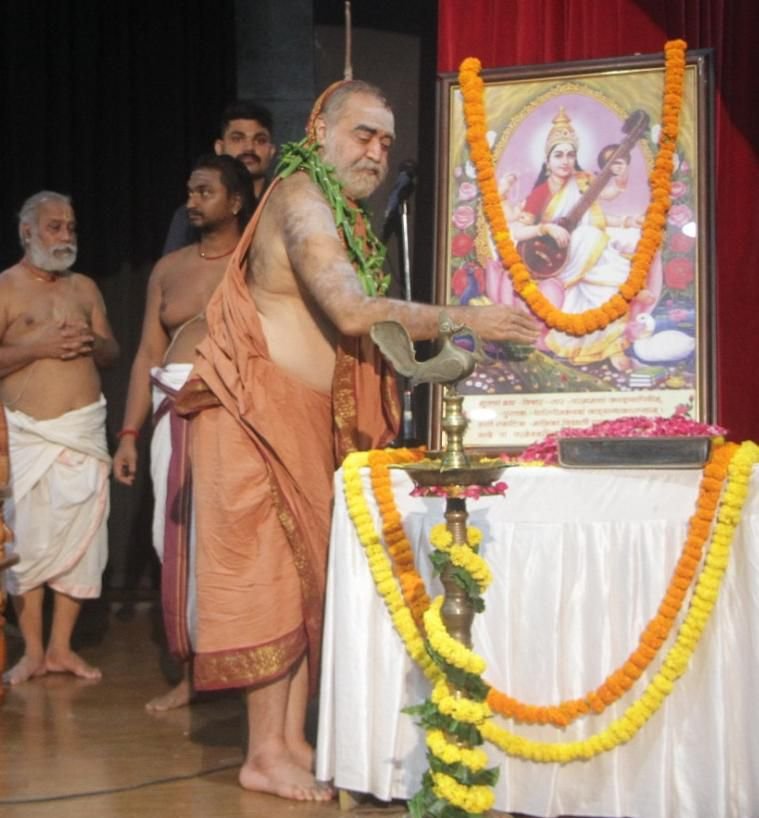
His Holiness Pujya Shankaracharya Swamiji blesses and inaugurates National Conference on Sanskrit & Epigraphy in JNU, New Delhi
04-07-2026
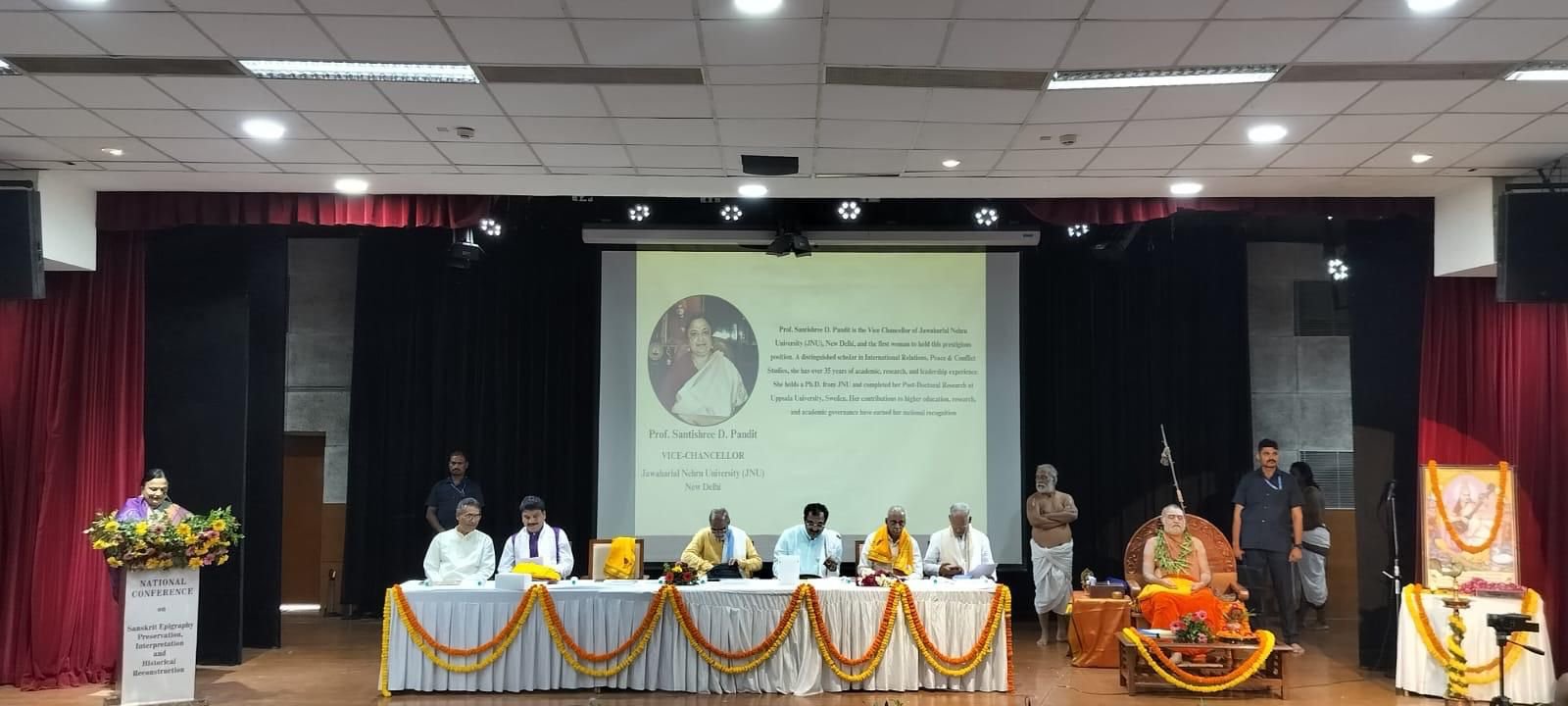
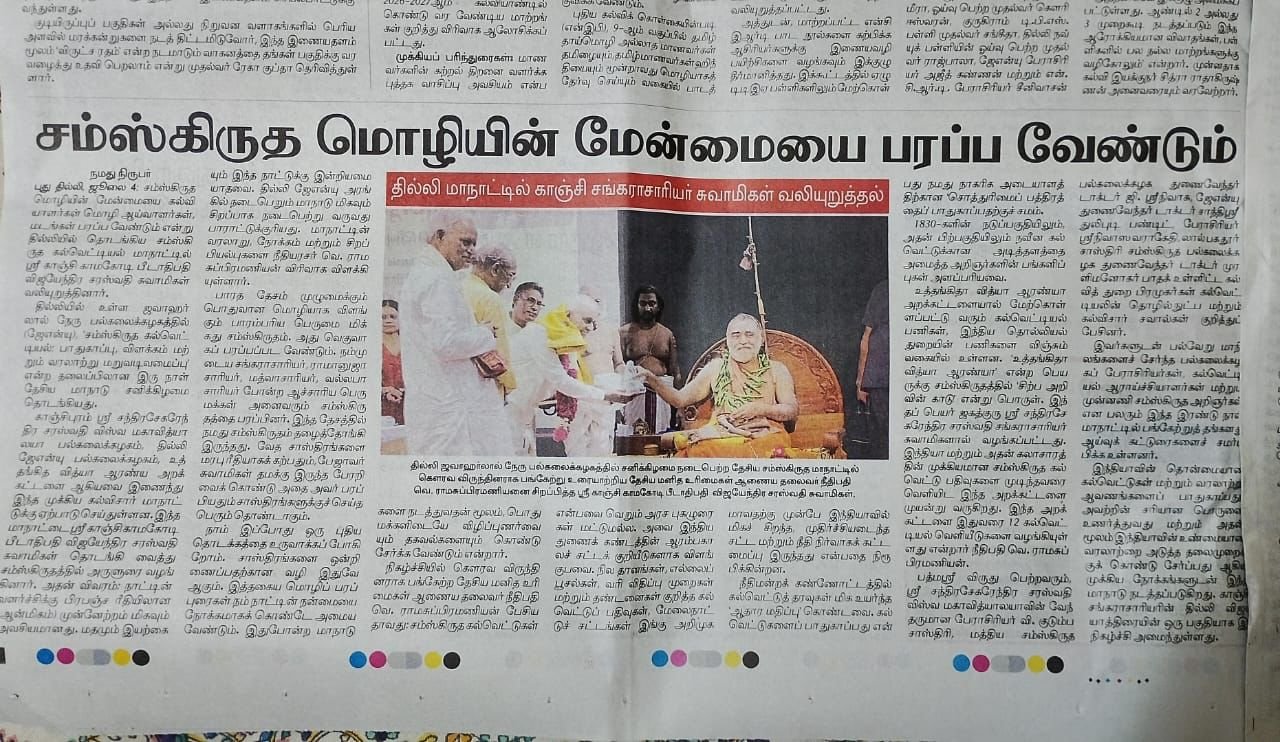
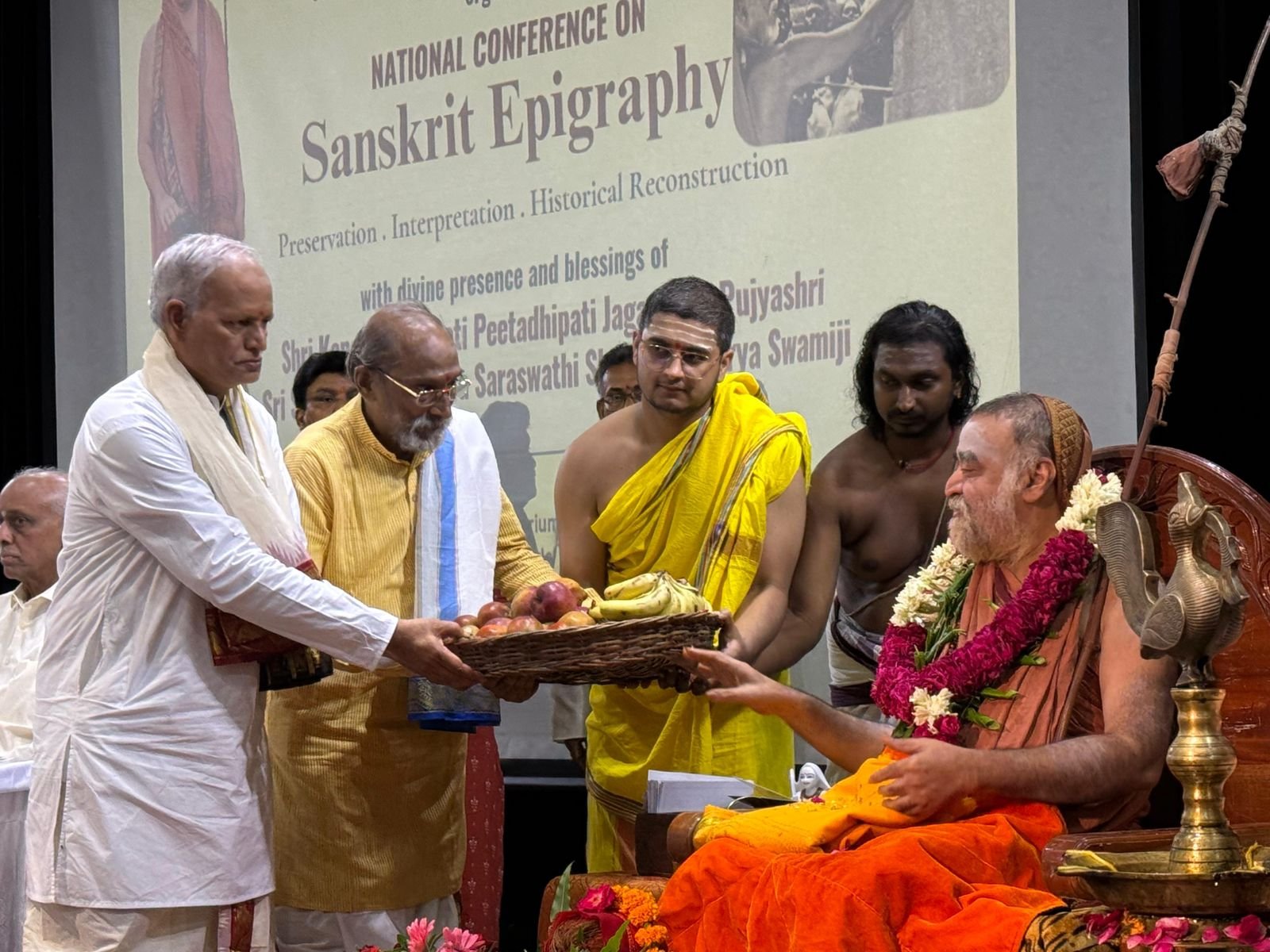
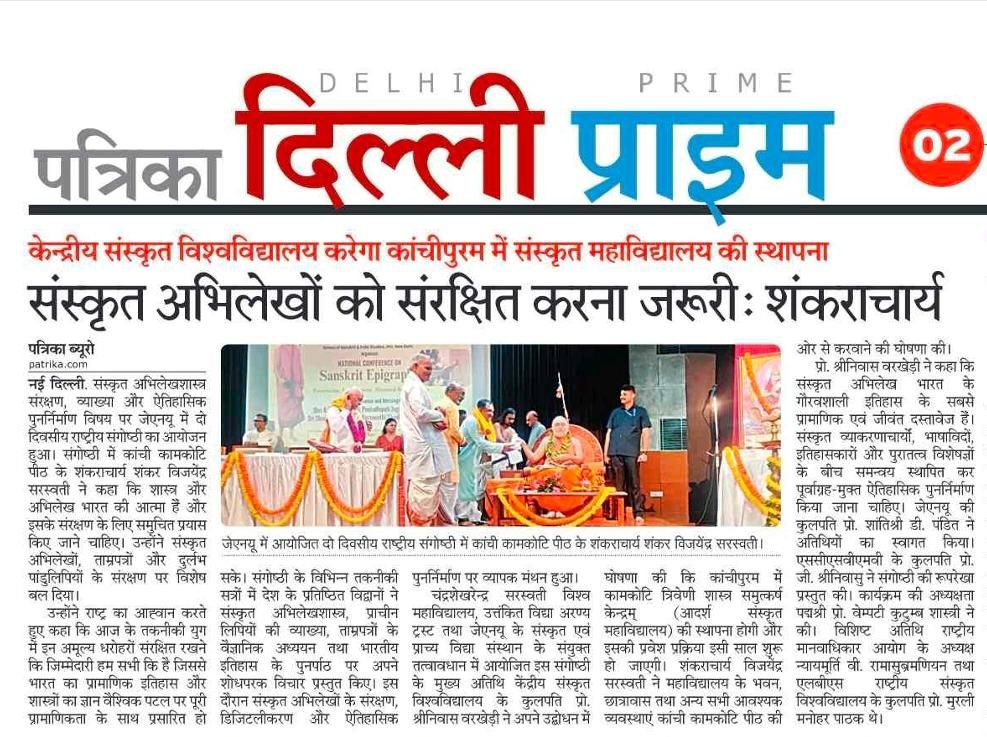
A prestigious National Conference on Sanskrit Epigraphy, focusing on the "Preservation, Interpretation, and Historical Reconstruction" of ancient inscriptions, was inaugurated at Jawaharlal Nehru University (JNU), New Delhi.
The two-day conference is a collaborative effort between the Department of Sanskrit and Indian Culture at Sri Chandrasekharendra Saraswathi Viswa Mahavidyalaya (SCSVMV), Kanchipuram, the Utankita Vidya Aranya Trust, and the School of Sanskrit and Indic Studies, JNU.
Divine Presence and Key Dignaries
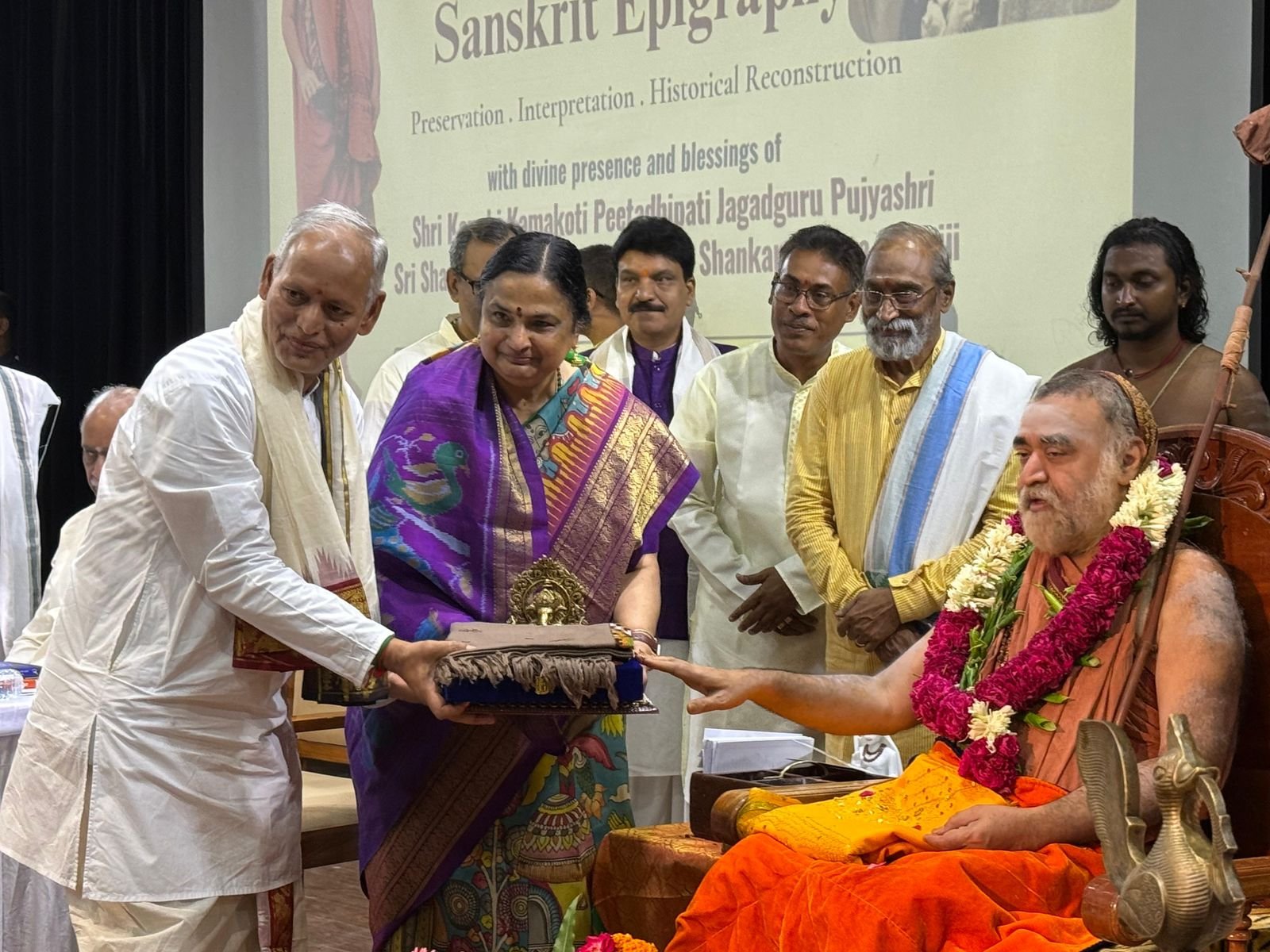
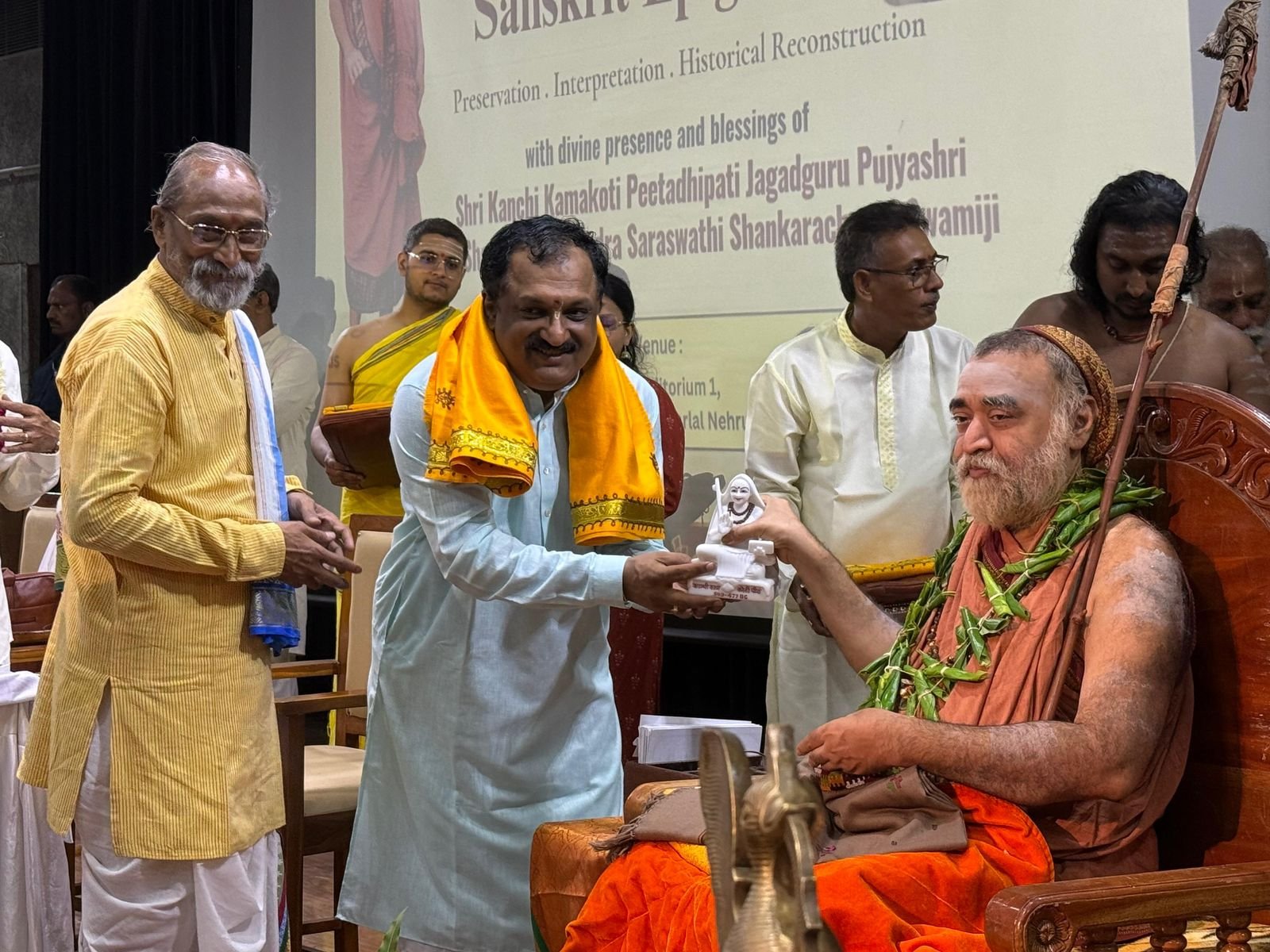
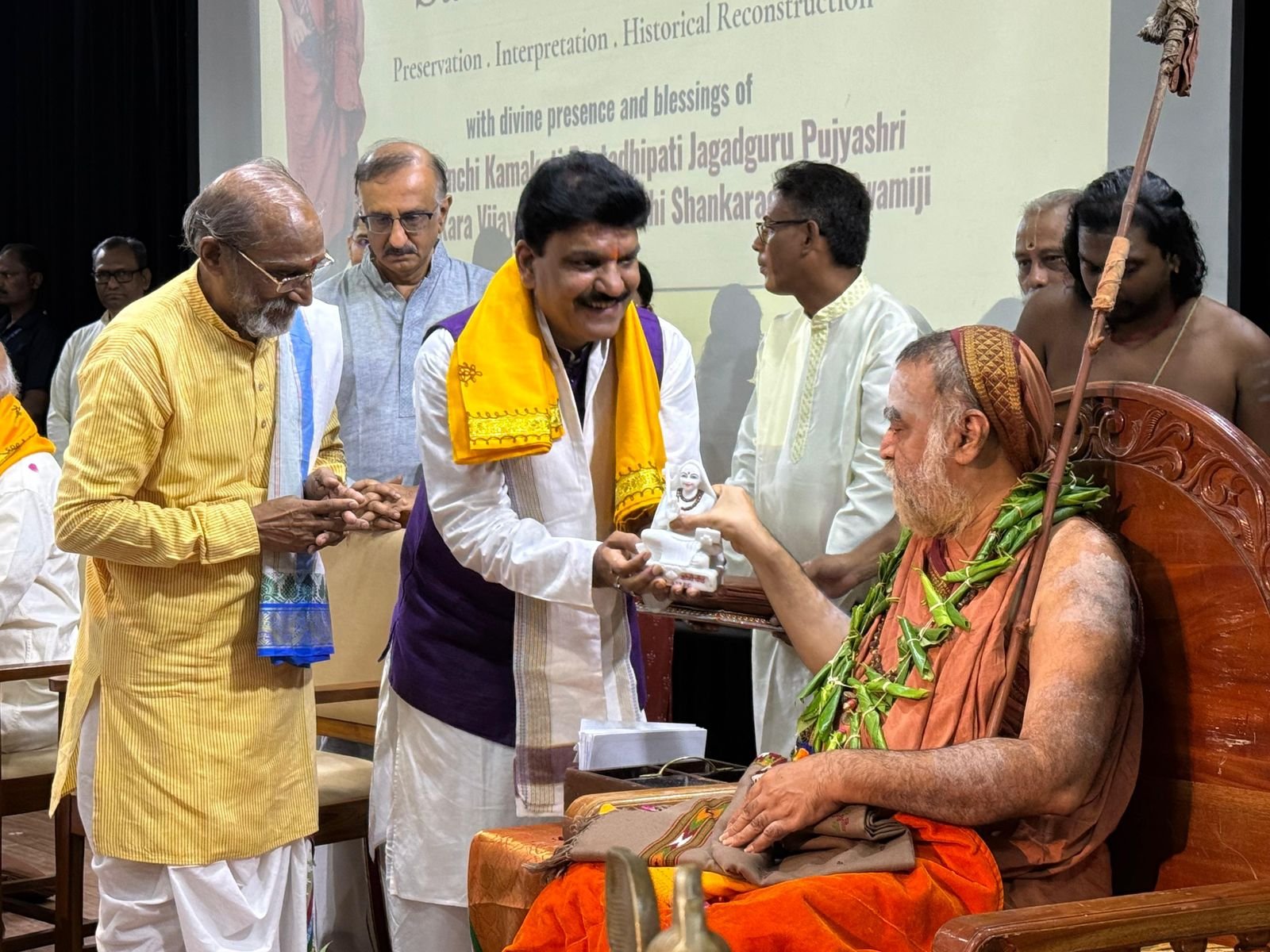
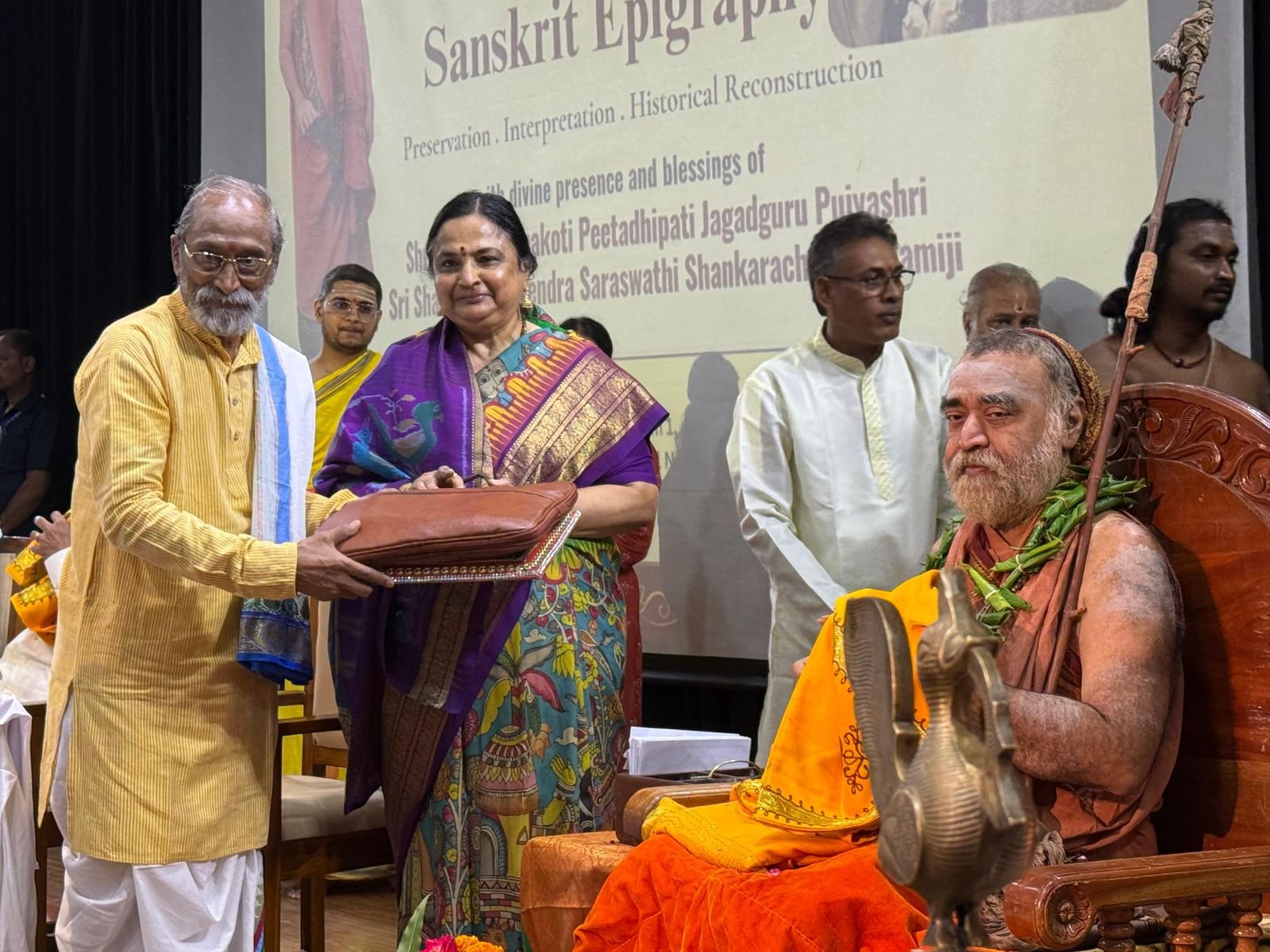
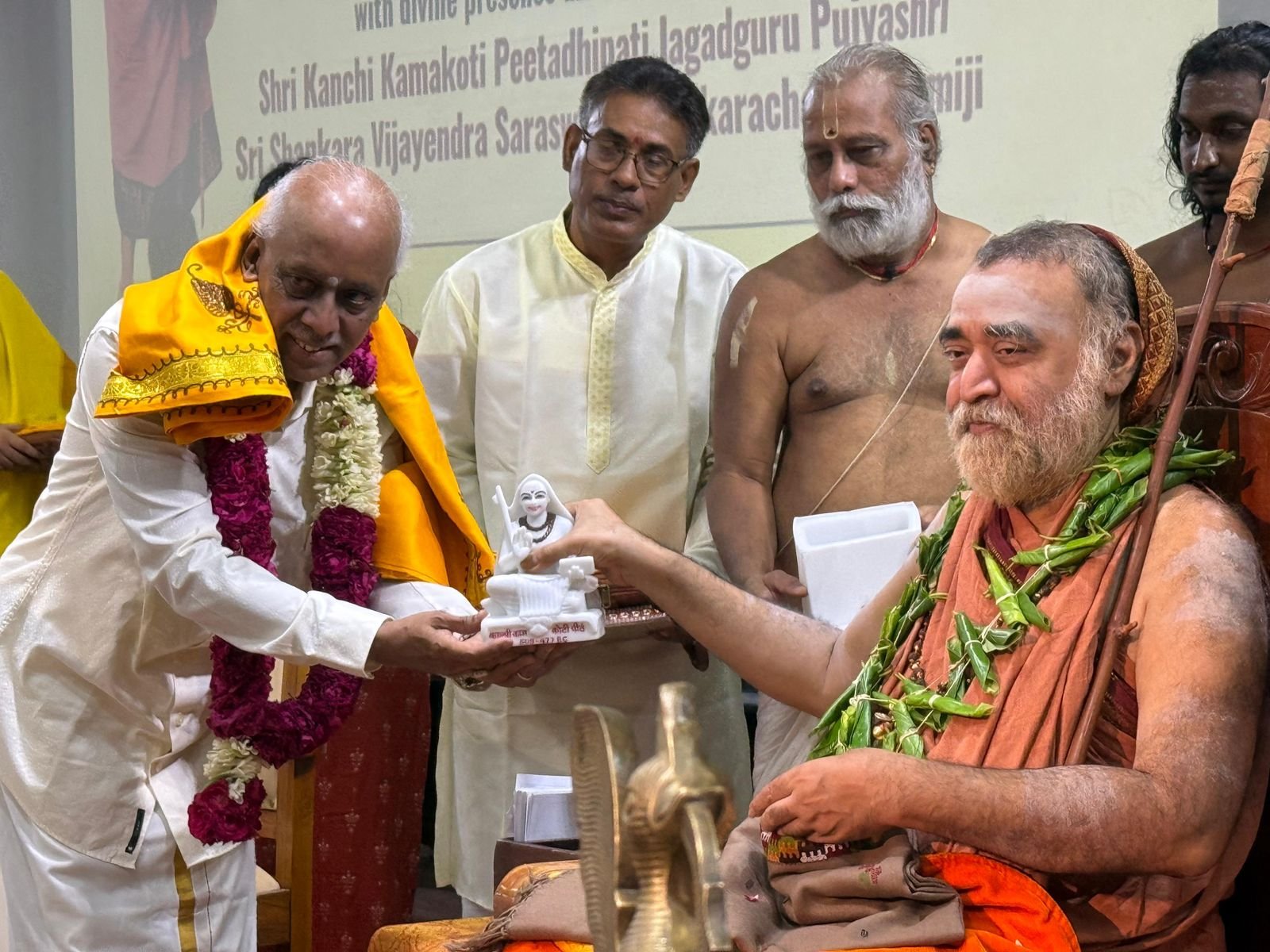
The inaugural session was graced by the Anugraha Bhashanam (blessing discourse) of His Holiness Sri Sankara Vijayendra Saraswathi Swamigal, the Shankaracharya of Sri Kanchi Kamakoti Peetam.
The stage hosted prominent judicial and academic luminaries:
Justice V. Ramasubramanian (Retired Supreme Court Judge and current Chairperson of the National Human Rights Commission)
Prof. Shantisree Dhulipudi Pandit (Vice-Chancellor, JNU)
Prof. Srinivasa Varkhedi (Vice-Chancellor, Central Sanskrit University)
Prof. Murlimanohar Pathak (Vice-Chancellor, Shri Lal Bahadur Shastri National Sanskrit University)
Prof. V. Kutumba Sastry (Padma Shri awardee and Chancellor of SCSVMV)
- Prof. G. Srinivasu, Vice Chancellor, Sri Chandrasekharendra Saraswati Viswa Mahavidyalaya
Major Announcements & Highlights
1. Establishment of 'Kamakoti Triveni' Sanskrit College
In a major boost to traditional studies, Prof. Srinivasa Varkhedi announced that the Central Sanskrit University has decided to re-establish and continue the legacy of the Sanskrit Kala-Shala in Kanchipuram under the name "Kamakoti Triveni". It will operate as an autonomous Shastra Samutkarsha Kendram (Center of Excellence for Shastra Studies) to teach deep traditional Shastras via authentic ancient methodologies rather than contemporary college formats.
2. The 45-Year Legacy of the Utankita Vidya Aranya Trust
Representing the trust, Justice V. Ramasubramanian and Prof. G. Srinivasu detailed the monumental 45-year history of the Utankita Vidya Aranya Trust (founded in 1981 under the vision of the Param pujya Kanchi Paramacharya, Sri Chandrasekharendra Saraswathi Swamigal). The trust has successfully compiled and published 14 volumes of Sanskrit and Prakrit epigraphic records spanning from 257 BCE to the 12th Century CE, covering historical edicts, copper plates, royal proclamations (Shasanas), and literary works.
3. Integrating AI and Modern Technology in Epigraphy
Speakers emphasized moving away from isolated academic silos. Prof. Varkhedi highlighted recent breakthroughs presented at national missions where Artificial Intelligence (AI) was successfully leveraged to read and interpret ancient Brahmi scripts. He urged the youth and tech-experts to deploy modern computing tools to preserve scriptology and manuscriptology.
4. Cultural Inclusivity at JNU
Welcoming the gathering, JNU Vice-Chancellor Prof. Shantisree D. Pandit re-asserted JNU’s position as a premier, culturally diverse, nationalist institution actively advancing the Indian Knowledge Systems (IKS). She noted that the university has recently built dedicated centers for Hindu, Buddhist, and Jain studies, bridging the gap between historical heritage and modern research.
Spiritual Benediction
In his spiritual address, His Holiness the Kanchi Shankaracharya underscored that ancient inscriptions form the authentic primary data for India's history. He fondly recalled how the late Paramacharya would personally inspect, clean, and decipher stone carvings at temple corridors during his padayatras.
The Shankaracharya added that inscriptions serve as vital proofs of society’s spiritual footprint, highlighting examples from outside modern India—such as Sanskrit inscriptions in Cambodia—which record the sacred preservation of nature and ancient traditions. To foster future interest, he recommended starting dedicated certificate courses in script science (Lipi Vigyan) and instituting national student awards for epigraphy studies. Eminent scholars are scheduled to make presentations during the 2-day conference.
Back to news page