Vinayaka Chaturti Puja — 21 Types of Leaves
Ekavimshati Patra Puja (एकविंशति पत्र पूजा) at Sri Sankara Matam
Ekavimshati Patra Puja (21 Types of Leaves Archana)
As part of the solemn Vinayaka Chaturti Puja, the traditional Ekavimshati Patra Puja (archana offered with 21 distinct botanical leaves) is performed to Lord Vinayaka at Sri Kanchi Kamakoti Peetham Shrimatam.
Each sacred leaf corresponds to an auspicious divine name of Lord Ganesha in the scriptural Vrata Kalpa, invoking health, environmental harmony, intellect, and spiritual upliftment. Below are archival photographs of the sacred leaves displayed at Shrimatam along with annotations in Sanskrit, Tamil, Telugu, and English, accompanied by the specific Puja Mantras for the benefit of devotees and practitioners.
 Enlarge
01. Tulasi (Holy Basil)
Ocimum sanctum / tenuiflorum
Revered for purity and air purification; sacred offering uniquely ordained for Ganesha on Vinayaka Chaturthi.
 Enlarge
02. Shami (Khejri / Vanni)
Prosopis cineraria
Destroys sins and negative energies; revered by the Pandavas and associated with victorious beginnings.
 Enlarge
03. Dadimi (Pomegranate)
Punica granatum
Known for cooling and rejuvenating properties; symbol of fertility, prosperity, and spiritual vitality.
 Enlarge
04. Gandaki (Machipatri)
Artemisia nilagirica / vulgaris
A fragrant medicinal herb that dispels insects and nervous ailments; cleanses subtle air channels.
 Enlarge
05. Vishnukranta
Evolvulus alsinoides
A famed Medhya Rasayana herb enhancing memory, intellect, and mental calmness.
 Enlarge
06. Badari (Jujube / Ber)
Ziziphus mauritiana
Sacred tree of Badrinath; heals skin conditions and balances Pitta dosha.
 Enlarge
07. Dhattura (Datura)
Datura metel
Beloved by Lord Shiva and Ganesha; powerful medicinal herb for respiratory relief when properly purified.
 Enlarge
08. Apamarga (Prickly Chaff)
Achyranthes aspera
Renowned in Ayurveda for digestive fire, dental strength, and neutralizing toxic stings.
 Enlarge
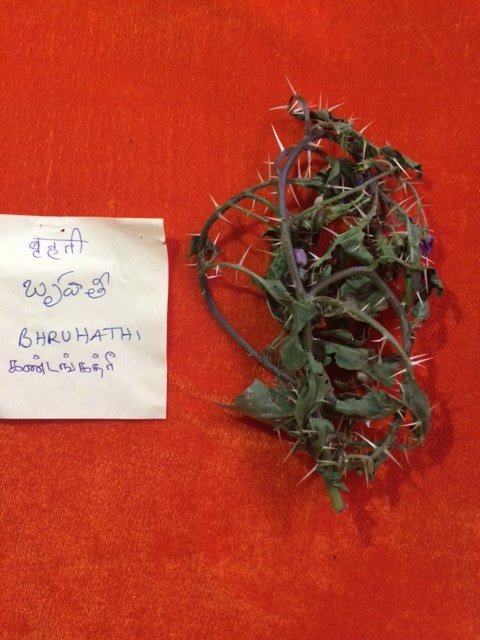
09. Brihati (Indian Nightshade)
Solanum indicum / virginianum
One of the Dashamoola herbs; revered for curing chronic coughs and boosting immunity during seasonal shifts.
 Enlarge
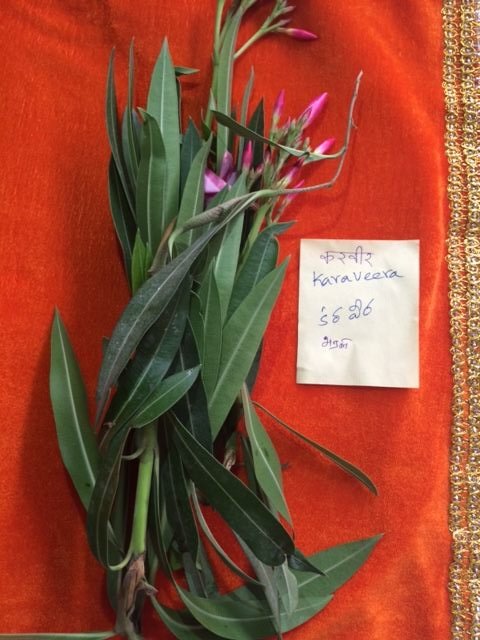
10. Karaveera (Oleander)
Nerium indicum / oleander
Prized in Deva archana; externally useful in traditional medicine for skin diseases and ulcers.
 Enlarge
11. Shweta Arka (Crown Flower)
Calotropis gigantea (alba)
Beloved of Ganesha (Arka Ganapati); celebrated for pain alleviation, anti-inflammatory and solar energy.
 Enlarge
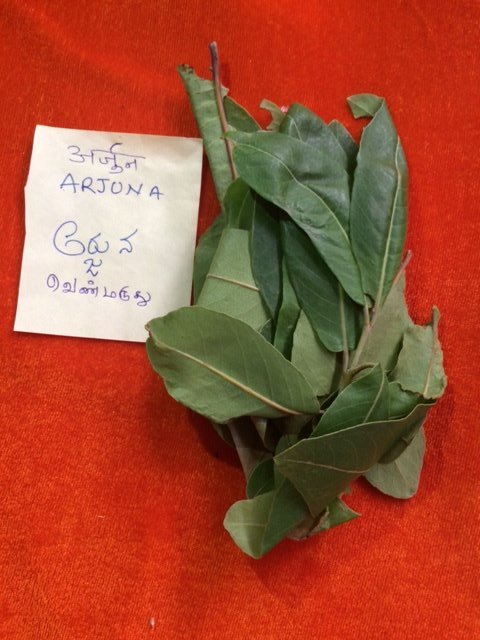
12. Arjuna (White Murdah)
Terminalia arjuna
The premier Ayurvedic cardioprotective tree; fortifies blood vessels, heart energy, and physical vigor.
 Enlarge
13. Devadaru (Deodar Cedar)
Cedrus deodara / Polyalthia
"Timber of the Gods"; emits sacred aroma that elevates consciousness and calms nervous tension.
 Enlarge
14. Maruvaka (Sweet Marjoram)
Origanum majorana
Deeply aromatic foliage used in sacred temple garlands; relieves headache, anxiety, and digestive sluggishness.
 Enlarge
15. Ashvattha (Sacred Peepal)
Ficus religiosa
King of sacred trees; continuously generates oxygen and purifies the atmosphere; traditional abode of Lord Ganesha.
 Enlarge
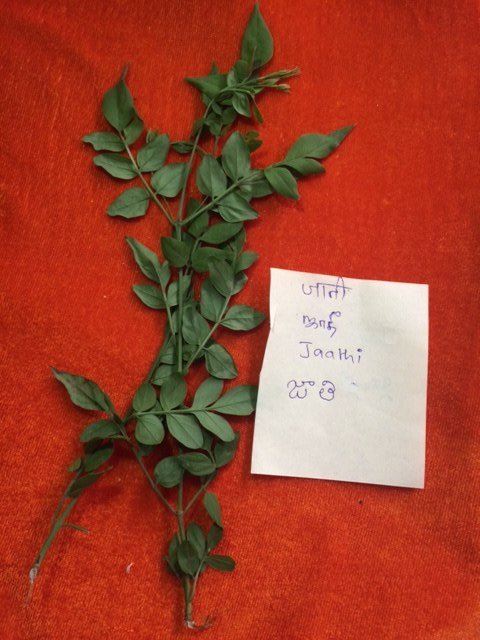
16. Jati (Royal Jasmine)
Jasminum grandiflorum
Renowned for divine fragrance; highly cooling, soothes mouth ulcers, and purifies oral cavities.
 Enlarge
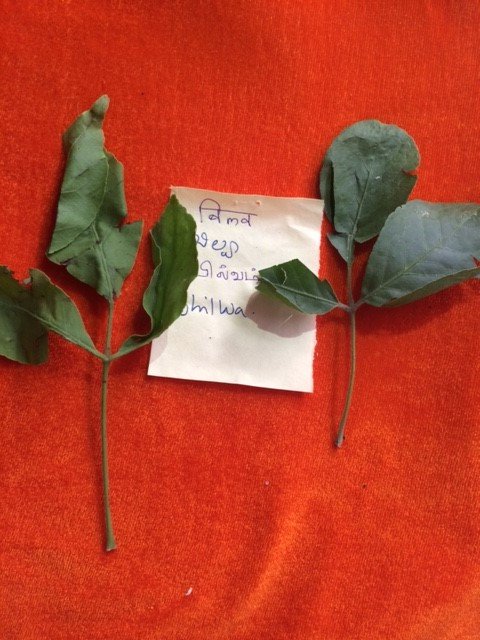
17. Bilva (Sacred Bael)
Aegle marmelos
Tri-foliate leaf embodying the three Gunas and Lord Shiva's Trishula; powerful antidote against diabetic and gastric disorders.
 Enlarge
18. Durva (Bermuda Grass)
Cynodon dactylon
The dearest offering to Lord Ganesha; cooled His divine body after swallowing demon Analasura; highly alkaline tonic.
 Enlarge
19. Agastya (Hummingbird Tree)
Sesbania grandiflora
Named after Maharshi Agastya; exceptionally rich in calcium and vitamins; detoxifies Pitta and cleanses digestive tract.
 Enlarge
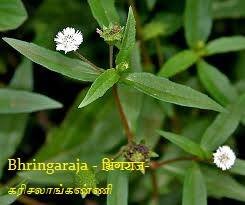
20. Bhringaraja (False Daisy)
Eclipta alba / prostrata
Supreme Rasayana for liver vitality, vision, and hair longevity; restores cellular health and rejuvenates senses.
21. Sindhuvāra (Nirgundi)
Vitex negundo
Completes the 21 sacred offerings (Ekavimshati); celebrated for pacifying Vata, curing joint inflammations, and clearing sinus congestions.
Why 21 Leaves for Lord Vinayaka?
The number 21 in Vedic tradition signifies the 5 Karmendriyas (organs of action), the 5 Jnanendriyas (organs of perception), the 5 Pranas (vital airs), the 5 Mahabhutas (elements), and the inner mind (Antahkarana). By offering these 21 leaves to Lord Ganesha, a seeker symbolically surrenders every facet of existence at the Lord's feet.
Seasonal Health Harmony
Vinayaka Chaturthi occurs during the Bhadrapada month during the transition from Varsha Ritu (monsoon) to Sharad Ritu (autumn), when airborne viruses, skin ailments, and waterborne pathogens peak. Every leaf in this puja possesses potent antimicrobial, antiviral, or immunity-boosting attributes.
Ecological Immersion
When traditional unbaked clay murtis along with these 21 leaves are immersed in lakes, wells, and rivers (Visarjan), the herbal compounds naturally purify the water bodies, destroying algae and harmful bacteria while enriching aquatic life.
Shrimatam Observance
At Sri Kanchi Kamakoti Peetham, His Holiness Shankaracharya Swamigal observes the Ekavimshati Patra Puja following the daily Sri Chandramouleeswara Puja with meticulous Vedic recitations, preserving millennia of sacred ritual purity.
Leaf Title
01 / 20Multilingual leaf caption